A sales pipeline that shows the next step on every deal.
SealDeal is a sales CRM with the pipeline at its center: every deal on one board, by stage, qualified the way your team already sells. The CRM and the board are on the Free plan.
The pipeline board
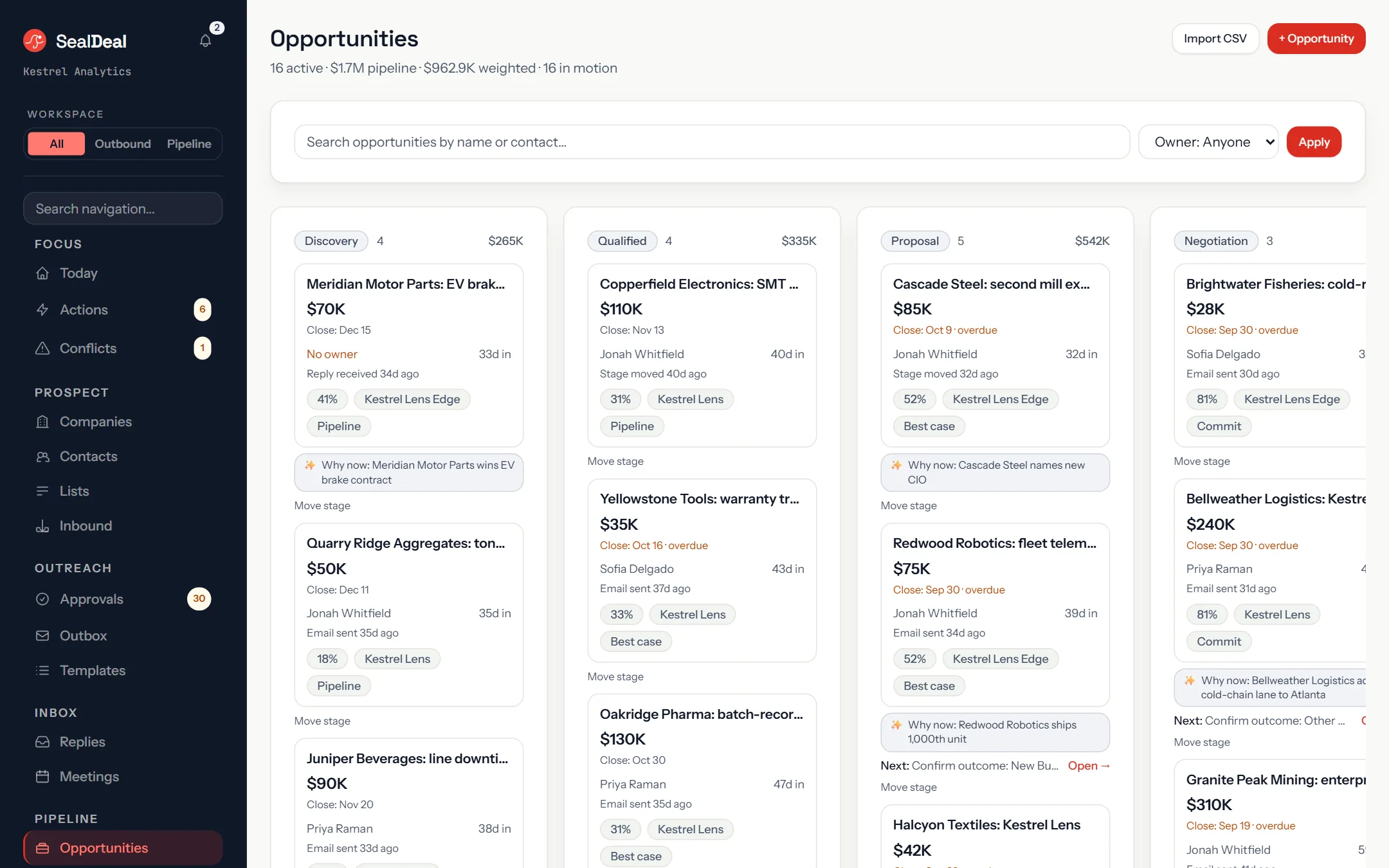
Deals by stage
Every open deal sits in a column for its stage. A new workspace starts with Discovery, Qualified, Proposal, Negotiation, Closed Won and Closed Lost, and an admin can rename, reorder, add or archive stages.
Move a deal by dragging it
Drop a card on another column and the move goes through the same checks as a click: the stage gate, the transition rules, and a close reason when a deal is won or lost. A column the deal cannot move to will not accept the drop.
What each card shows
The deal value, the close date (flagged when it has passed), how long the deal has sat in its stage, its forecast category, its readiness, and the next action waiting on it.
The number at the top
The board shows a weighted total for the deals in view, so a filtered board still adds up to what you are looking at.
Your deals or the team
Reps open on their own deals; managers open on everyone. Search finds a deal by its name or its primary contact.
Bring the spreadsheet
Import deals from a CSV. You see what each row will become, or why it will be skipped, before anything is created.
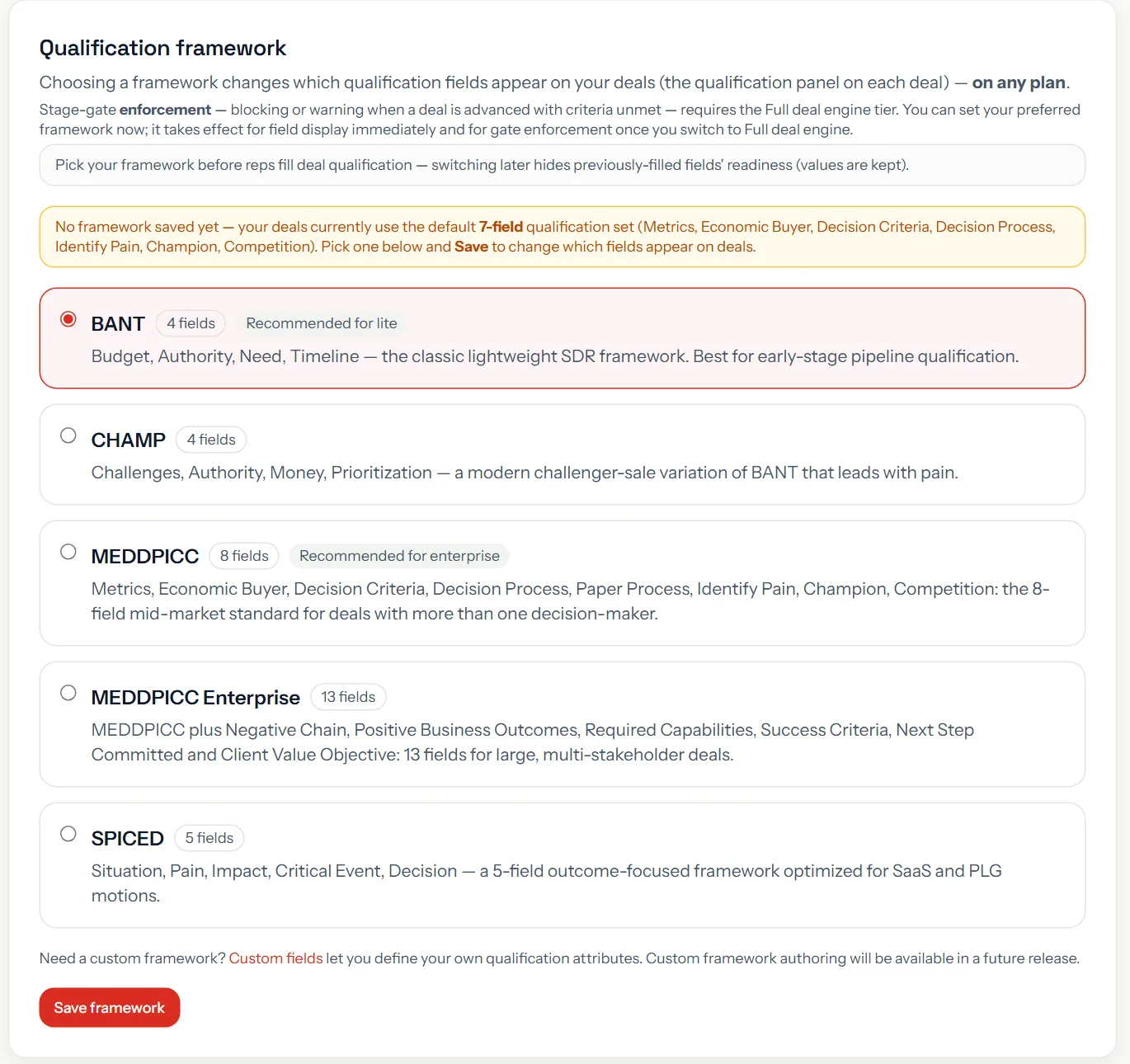
Qualified your way
Pick the framework your team uses (BANT, CHAMP, MEDDPICC, MEDDPICC Enterprise, SPICED) on any plan, and the deal page asks for its fields. Write exit criteria for each stage; on the Enterprise plan the Full deal engine enforces them, as a warning or a hard stop.
A sales CRM, not just a board
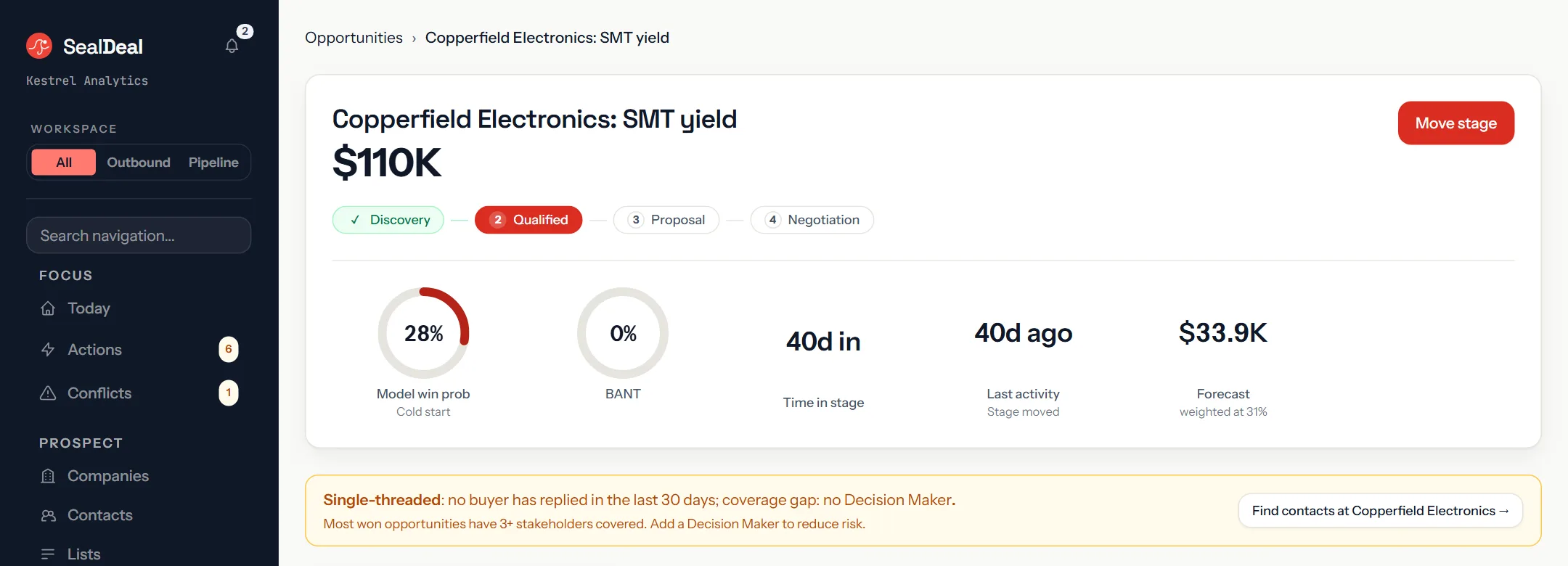
The pipeline is one view of the CRM. Each deal links to its contacts and their roles in the buying group, its notes and its files, and the same deal shows on the contact and company pages. Move it on the board and every page agrees.
What is free and what costs actions
Keeping the CRM and working the pipeline is free. The intelligence is what you pay for, measured in actions: a deal review is 5, and the Free plan gives 300 for a work email, no card. See pricing.
Common questions
What is a sales pipeline?+
A sales pipeline is the set of open deals a team is working, arranged by how far along each one is. Each stage (some teams call them buckets) stands for a step the buyer has taken, such as a discovery call or a proposal. Reading the pipeline tells you what will likely close, what is stuck, and where the next hour of selling should go.
What is the difference between a sales CRM and a sales pipeline?+
The CRM is the record: contacts, companies, deals and the history between them. The pipeline is one view of that record, the deals laid out by stage. In SealDeal they are the same data, so a deal you move on the board is the deal on the contact and the company pages.
Which qualification frameworks does it support?+
An admin picks one for the workspace: BANT, CHAMP, MEDDPICC, MEDDPICC Enterprise, SPICED. The deal page asks for that framework's fields, and each stage can carry its own exit criteria.
Can I stop deals moving forward before they are qualified?+
Yes, on the Enterprise plan. Any workspace can write exit criteria for each stage. Enforcing them is part of the Full deal engine: an admin chooses soft (warn and ask for a reason when criteria are unmet) or hard (block the move until they are met).
Is the sales CRM free?+
The CRM and the pipeline board are on the Free plan: $0, no card, no time limit. What you pay for is the intelligence the product produces, measured in actions. A deal review is 5 actions, and the Free plan gives 300, once, for a work email. You always see the count before you spend.
Can I import my existing pipeline?+
Yes, from a CSV. The import shows a preview of every row first, including the rows it will skip and why, and only creates deals once you confirm.
SealDeal launched in September 2026. This page describes how the pipeline works; it claims no measured result, and there is no case study or customer count to quote.
Related: vs HubSpot · vs Salesforce · Pre-sales questionnaires · Grounded outbound